
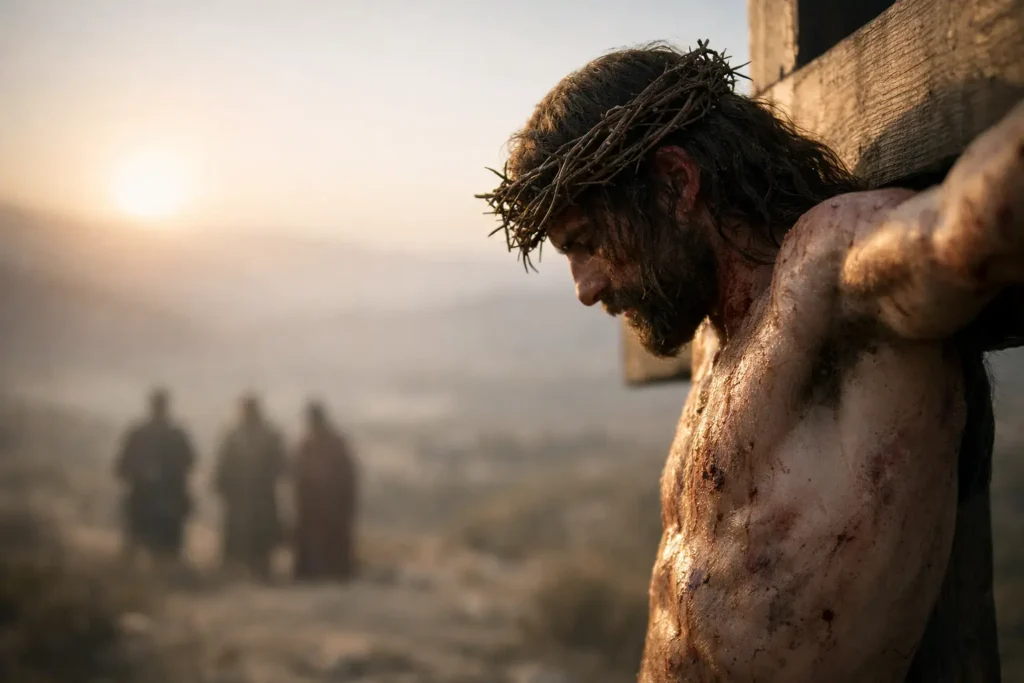
A cross was a public instrument of Roman execution. It was designed to shame, torture, and silence. That is what makes the Christian claim so striking: what is the message of Jesus on the cross? Christians believe it is not merely the story of a good teacher dying tragically. It is the place where God shows the depth of His love, the seriousness of human sin, and His way of bringing forgiveness and new life.
You do not need to have every belief settled to ask what the cross means. It is a question worth taking seriously, especially if you have wondered whether God sees suffering, whether forgiveness is possible, or whether your life can truly change.
The cross says that God loves people at great cost
Jesus did not speak about love only in warm, inspiring words. He lived it when it cost Him everything. Christians believe Jesus willingly gave His life, not because people had earned His kindness, but because God loved a broken world.
The Bible puts it plainly: “God demonstrates His own love for us in this: While we were still sinners, Christ died for us” (Romans 5:8). That is different from the message many of us expect to hear. We often assume we must improve ourselves before God could want us. The cross says God moved toward us first.
This does not mean God ignores what is wrong in us or around us. Love that pretends evil does not matter is not real love. Rather, the cross shows a love honest enough to face our deepest failures and strong enough not to abandon us there.
For someone carrying shame, this matters. Your worst decision, your hidden struggle, or the way someone else has wounded you does not place you beyond God’s concern. Jesus met people who were rejected, guilty, grieving, sick, religiously skeptical, and spiritually confused. The cross is the clearest sign that His welcome is not reserved for people who look put together.
The message of Jesus on the cross includes the reality of sin
“Sin” can sound like an old religious word, but it describes a familiar reality. It is the way we turn from God and harm one another through pride, dishonesty, selfishness, cruelty, indifference, and injustice. It appears in personal choices, but it also appears in communities and systems that value some people less than others.
The cross does not excuse this reality. Jesus was betrayed, falsely accused, mocked, beaten, and executed by human authorities. At the cross, we see what human sin can do when fear, power, prejudice, and self-interest take control.
But the Christian message is not that some people are the villains and everyone else is innocent. The Bible places all of us in need of mercy. That can be uncomfortable, because we naturally compare ourselves with someone else. Yet the cross levels the ground. No one can claim they saved themselves, and no one is too far gone to be invited back.
This is also why Christians should never use the cross as a weapon to shame people or avoid questions about justice. Jesus’ death exposes evil; it does not give His followers permission to excuse it. If we say the cross matters, then the dignity of every person must matter too.
Jesus took our place to make forgiveness possible
At the center of the Christian understanding of the cross is this truth: Jesus died for us. He took upon Himself the consequences of sin so that people could be reconciled to God.
Different parts of the Bible describe this gift in several connected ways. Jesus is spoken of as a sacrifice for sin, the righteous one suffering for the unrighteous, and the King who defeats the powers of evil through what looked like defeat. These are not competing messages. Together, they show that the cross is larger than a simple transaction. It deals with guilt, breaks the grip of sin, exposes evil, and opens a way home to God.
Some people ask, “Why could God not just forgive without the cross?” It is a fair question. In everyday life, forgiveness is never free. When someone causes real harm, somebody bears the cost. The person who forgives absorbs pain instead of demanding repayment or revenge. At the cross, Christians believe God Himself bears the cost of making forgiveness available. He does not stand at a distance and ask humanity to solve a problem it cannot solve.
That does not make suffering good, and it does not mean God asks victims of abuse or injustice to stay in danger or instantly trust someone who has harmed them. Forgiveness and reconciliation are related, but they are not identical. Reconciliation requires truth, repentance, and safety. The cross assures us that God sees wrong clearly, even as He offers mercy.
The cross shows that God understands suffering
Jesus cried out in agony. He was abandoned by friends, publicly humiliated, and killed. Christians do not believe God is detached from human pain. In Jesus, God entered it.
That does not answer every question about why suffering exists. A quick answer can feel hollow beside grief, violence, illness, or loss. The cross offers something more personal than a slogan: God is not absent from the pain of the world. He knows betrayal. He knows injustice. He knows what it is to weep and to suffer.
For many people, that does not remove the question “Why?” But it can change the question from “Does God care?” to “Could God meet me here?” Christianity says yes. The crucified Jesus meets people in the places they would rather hide, with compassion and truth.
The cross is not the end of Jesus’ story
If Jesus remained dead, the cross might only be a moving example of sacrifice. But Christians believe He rose from the dead on the third day. The resurrection does not erase the cross. Jesus’ risen body still bears wounds. Instead, it declares that death, sin, and evil do not have the final word.
This is why the cross carries hope. It is not hope that life will always be easy or that faithful people will avoid hardship. It is hope that God can bring life where we see only endings. A person can be forgiven. A hardened heart can soften. A fractured relationship may find a path toward healing. A life marked by sin can become a life shaped by grace.
The cross also calls for a response. Jesus did not die merely to give us an idea to admire. He invites us to trust Him, turn from sin, receive His forgiveness, and follow Him. That journey involves faith, but it also becomes practical: learning to forgive, tell the truth, serve others, seek justice, and love our neighbors with the same costly love we have received.
What does the cross ask of you?
The message of Jesus on the cross is personal, but it is not private. It asks each of us to bring our real selves before God – not a polished version, not a rehearsed religious answer. We can bring doubt, regret, anger, questions, and hope.
You may not be ready to call yourself a Christian. You may have been hurt by church, confused by Christian claims, or unsure whether any of this can be true. Start honestly. Consider reading one of the Gospel accounts and noticing what Jesus says and does. Ask God, even if you are uncertain, “If You are there, help me know who Jesus is.”
The cross does not say that you must have it all figured out before you come near. It says that God has already taken the first step toward you. Your questions matter. And the invitation of Jesus remains open: come, receive mercy, and begin again.