
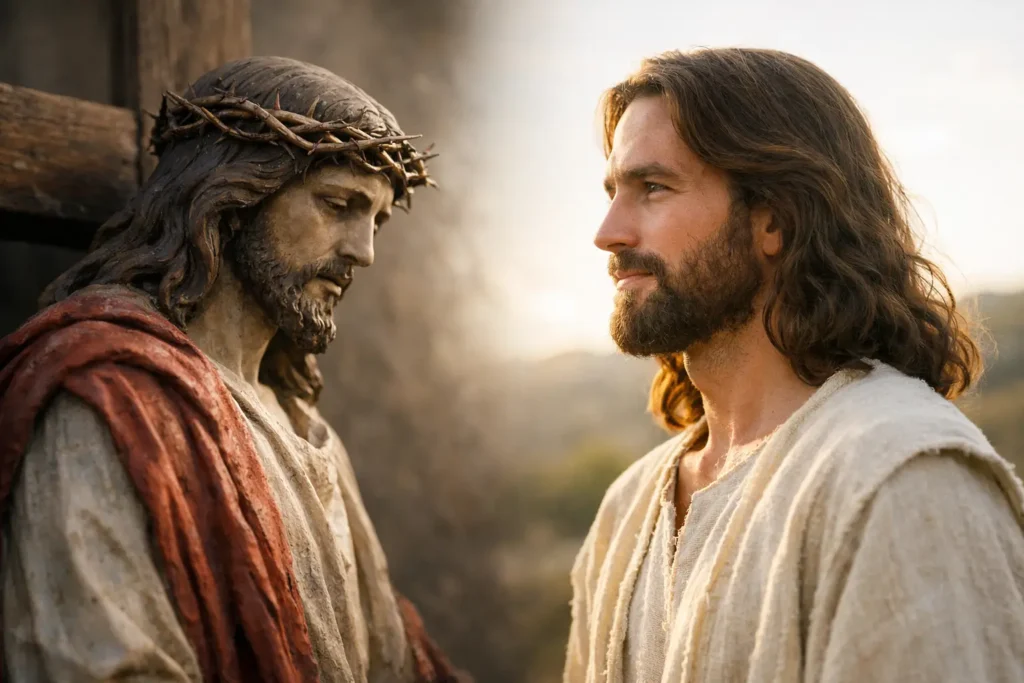
If you have ever asked how does the christian view of jesus differ from how islam or judaism views him, you are asking one of the biggest questions in religion. The difference is not small, and it is not mainly about wording. It reaches into who Jesus is, why He came, what salvation means, and whether knowing Him is optional or everything.
That matters because people can use the name Jesus while meaning very different things. A respectful conversation has to start there. Christians, Muslims, and Jews do not simply hold three versions of the same belief with a few details changed. They are making very different claims about the identity and role of Jesus.
How does the Christian view of Jesus differ from Islam or Judaism?
At the center of Christianity is the belief that Jesus is not merely a prophet, teacher, or moral example. Christians believe Jesus is the promised Messiah, the Son of God, and God the Son who took on human flesh. He lived without sin, died on the cross for sinners, physically rose from the dead, and is the only way people can be reconciled to God.
That is why Christians do not speak about Jesus as just one messenger among many. He is the turning point of history and the center of salvation. The Christian faith does not simply admire Jesus. It worships Him.
Islam and Judaism both reject that claim, but in different ways. Islam honors Jesus, though not as divine. Judaism, in its mainstream form, does not accept Jesus as Messiah or divine Lord. So the deepest difference is this: Christianity says Jesus is God incarnate and Savior. Islam says He is a prophet. Judaism says He is not the Messiah Christians say He is.
The Christian view of Jesus
For Christians, Jesus fulfills the long-awaited promises of the Old Testament. He is the Messiah, but not only in a political or national sense. He came to deal with humanity’s deepest problem, which is sin and separation from God.
Christians believe Jesus was born of the virgin Mary, lived a sinless life, performed miracles, taught with divine authority, died by crucifixion, rose bodily from the grave, and will return again. His death was not an accident or merely a tragic injustice. It was a willing sacrifice. In Christian belief, Jesus bore the judgment sinners deserve so that those who trust in Him can be forgiven and brought into peace with God.
This is where the Christian claim becomes very specific. Jesus is not just showing people the way. He is the way. He does not merely bring truth. He is the truth. He does not only teach about life with God. He is the life.
That is also why the resurrection matters so much. If Jesus truly rose from the dead, then His claims carry a weight no ordinary religious teacher could ever carry. Christianity stands or falls on that reality.
How Islam views Jesus
Islam speaks of Jesus, or Isa, with real respect. Muslims believe He was born of the virgin Mary and was a mighty prophet sent by God. They believe He performed miracles by God’s permission and that He will play a role in the last days. In that sense, Islam says more positive things about Jesus than many secular people do.
But Islam stops far short of the Christian confession. Muslims do not believe Jesus is God, the Son of God, or part of the Trinity. They do not believe His death on the cross secured atonement for sin. Traditional Islamic teaching also rejects that Jesus was crucified in the way Christianity teaches, and it denies His resurrection as the risen Son who conquered death.
So while Islam honors Jesus, it does not trust Him in the way Christians do. He is seen as an important servant of God, not God Himself. That sounds like a narrower difference than it really is. Once you remove Jesus’ divinity, His atoning death, and His resurrection as Christianity understands them, you no longer have the Christian gospel.
In Christianity, salvation is rooted in what Jesus has done. In Islam, salvation is not grounded in a crucified and risen Savior who bears sin in your place. That is a major divide, not a minor one.
How Judaism views Jesus
Judaism approaches Jesus from a different direction. Since Christianity grew out of the Jewish world, the conversation is closely connected to the Hebrew Scriptures and the meaning of the Messiah.
Mainstream Judaism does not accept Jesus as the promised Messiah. Why? Because Jewish expectation of the Messiah has commonly included things like the full gathering of Israel, lasting peace, justice across the earth, and a restored world order. Since those things were not completed in Jesus’ first coming, Judaism does not see Him as fulfilling the messianic role in the way Christians claim.
Judaism also rejects the idea that Jesus is divine. The worship of Jesus as Lord is seen as incompatible with a strict Jewish understanding of God’s oneness. For that reason, Jewish people may regard Jesus as a historical figure, a teacher, or even a deeply influential person, but not as God in the flesh or the risen Savior of the world.
There is another major difference too. Christianity teaches that the sacrificial system, the promises to Israel, and the whole story of Scripture find their fulfillment in Jesus. Judaism does not read the story that way. So the disagreement is not only about one person. It is also about how to read the Bible’s storyline and what kind of Messiah God promised.
The deepest point of disagreement
If you want the clearest answer to how does the Christian view of Jesus differ from how Islam or Judaism views him, it comes down to identity and rescue.
Who is Jesus?
Christianity says He is God the Son made flesh. Islam says He is a prophet, not divine. Judaism says He is not the divine Messiah Christians proclaim.
Why did He come?
Christianity says He came to save sinners through His death and resurrection. Islam does not accept that mission in the Christian sense. Judaism does not accept Jesus as the fulfillment of that saving role.
How should people respond to Him?
Christianity calls people to repent, believe, and worship Jesus as Lord. Islam respects Jesus but submits to Allah without worshiping Jesus. Judaism does not call people to place saving faith in Jesus.
Those are not side issues. They touch the heart of whether Jesus can save, whether He should be worshiped, and whether eternal life is found in Him.
Why Christians speak so clearly about Jesus
Some people hear this and feel like the differences are being overstated. Others worry that making distinctions sounds harsh. But clarity is not the same as hostility. You can be respectful and still be honest.
Christians speak clearly because Jesus spoke clearly. He did not leave room for being reduced to one teacher among many. If His own words are taken seriously, then people are eventually forced toward a decision. Either He is who He claimed to be, or He is not.
That does not mean every Muslim or Jewish person is hostile to Jesus. Many are thoughtful, sincere, and serious about God. It does mean sincerity alone cannot settle the truth question. Different beliefs about Jesus cannot all be equally true at the same time when they directly contradict one another.
A conversation worth having
If you come from a Muslim background, the Christian claim about Jesus may sound too high. If you come from a Jewish background, it may sound like a break from the worship of the one true God. If you are just skeptical of religion in general, it may sound too exclusive.
Still, Jesus keeps pressing the question. Not only, “What have you heard about Me?” but, “Who do you say that I am?”
That is one reason conversations like this matter so much. At Go Ask a Christian, we believe people deserve room to ask hard questions without being shamed for asking them. You do not need to have it all figured out to begin. But it helps to see clearly that the Christian message about Jesus is not vague religious inspiration. It is a specific claim about a specific person who entered history, died, rose, and calls people to trust Him.
If Jesus is only a prophet, then Christians have said too much. If He is the risen Son of God, then most of us have not yet said enough. That is why this question is worth more than a quick comparison. It is personal. And if you are still sorting it out, that is a good place to be honest and keep asking.